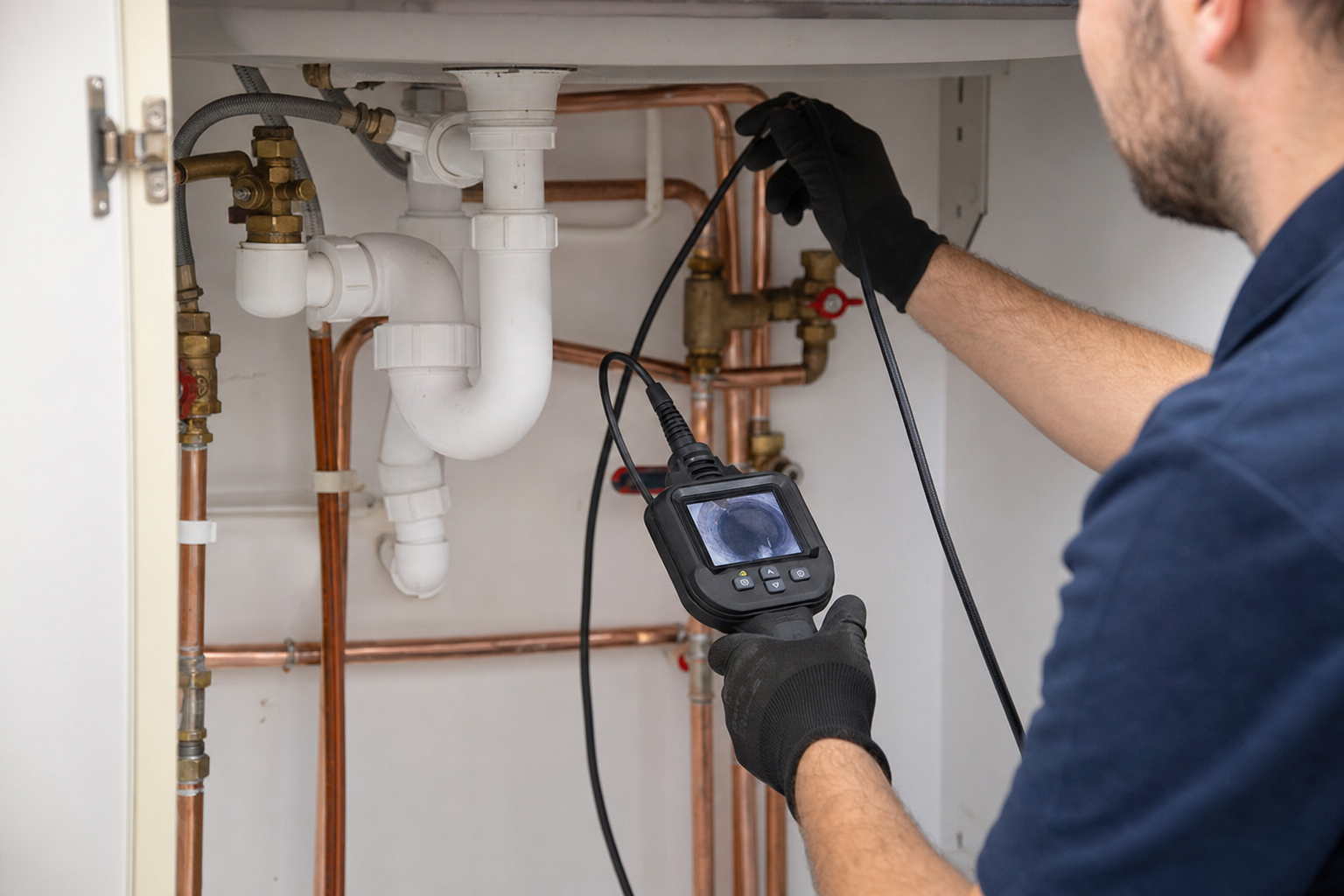
If you need help with water leaks Falconwood, G & S Plumbing & Heating provides practical leak detection and repair support for homes, rental properties and managed buildings across the local area. Water leaks can start small and stay hidden for days, but they often show up through damp patches, pressure loss, staining, mould, noisy pipework or a sudden increase in water use. Acting early can reduce damage and help prevent repeat callouts.
This page is focused on the most common leak problems we are asked about locally: hidden leaks, burst pipe repairs, leaking radiator repairs and leaking waste pipe repairs. If you are a homeowner, landlord, tenant or property manager in Falconwood, the safest next step is usually to shut off the water supply if needed, make the area safe and arrange a proper inspection before the problem spreads into floors, ceilings or adjoining rooms.
Our local service information is based on the type of work requested by customers in Falconwood and nearby areas such as Welling, Eltham and the roads around Falconwood Station, Avery Hill Park, Welling High Street, Eltham High Street and Oxleas Woods. For current availability, please contact 020 3519 1226 or use the contact details on the website.
Leak Detections in Falconwood
Leak detection is often the first step when the source of water is not obvious. In many homes, the visible sign is not the leak itself but the effect of it: a ceiling stain below a bathroom, damp around skirting boards, a loss of boiler pressure, a cold patch on flooring or a persistent smell of moisture. In flats and terraced homes around Falconwood, water can also travel along joists, pipe runs and wall cavities before it becomes visible.
When dealing with suspected hidden leaks, the usual process is to start with a visual inspection, then narrow down likely sources by checking exposed pipework, radiator valves, waste pipes, appliance connections and areas where water is most likely to collect. Customers can help by noting when the issue started, whether pressure has dropped, whether the leak worsens when heating is on, and whether any areas have recently been redecorated or repaired. That information can save time and reduce unnecessary disturbance.
For landlords and property managers, early leak detection matters because a small leak can become a wider building issue if tenants continue to use the property normally. If access is limited, it helps to arrange entry to the affected room, loft space, airing cupboard, under-sink area and any flat above or below if the layout suggests water may be travelling between units.
Typical signs that point to a hidden leak include:
- Damp patches on walls or ceilings
- Peeling paint, bubbling plaster or stained coving
- Pressure loss on the heating system
- Unexplained meter movement or higher water use
- Musty smells near floors, cupboards or pipe boxing
- Water appearing after showers, laundry use or heating cycles
If the leak is active, customers should avoid lifting flooring, opening sealed panels or drilling into walls until the likely route of the water has been assessed. In many cases, a careful, methodical inspection is the best way to reduce disruption and avoid repeat callouts for the same underlying issue.
Water Leak Repairs in Falconwood
Once the source has been identified, water leak repairs should deal with both the immediate fault and any related weakness in the pipework or fitting. A repair may involve replacing a worn connector, resealing a joint, renewing a section of pipe, tightening a failed connection or resolving an appliance-related leak. The right fix depends on where the leak is coming from and how much surrounding material has been affected.
Common water leak repair requests in Falconwood include leaks under sinks, around bath panels, from cold-water feeds, at stop valves, near toilets and behind boxing. In some properties, the leak is small but persistent, which can be just as damaging as a larger burst if it goes unnoticed. In others, the issue only appears when water pressure changes or the heating system is running, which is why a proper diagnosis matters before any repair is started.
Practical steps customers can take before a visit include:
- Turning off the water supply if the leak is active or spreading
- Moving items away from the affected area
- Taking a photo of visible damage for records or insurance purposes
- Keeping access clear to stop taps, under-sink areas and boiler cupboards
- Letting tenants know not to use the affected fitting until it has been checked
In rental homes, it is also sensible to record when the leak was first noticed and which rooms are affected. That helps with repair planning, tenant communication and any follow-up work if plaster, flooring or decoration needs attention after the plumbing fault has been resolved.
G & S Plumbing & Heating provides local plumbing support for leak-related issues alongside related services such as general plumber callouts, emergency plumbing, boiler repairs, boiler installations, central heating, underfloor heating, gas engineers and blocked drains. If the leak appears to be connected to heating equipment or waste pipework, the problem may need more than a simple visible repair, especially where pressure loss or repeated staining has already started.
Burst Pipe Repairs in Falconwood
Burst pipe repairs are usually needed when water escapes quickly and starts to flood a room, cupboard, ceiling void or floor area. Burst pipes can happen in cold weather, after long-term corrosion, where a joint has weakened, or where movement in the building has put stress on the pipework. Even a small split can release a surprising amount of water in a short time.
If a pipe bursts, the immediate priority is to isolate the water supply and reduce the spread of damage. Customers should switch off the mains stop tap if it is safe to do so and avoid using taps, appliances or heating circuits that may feed the damaged line. If water is near electrics, lights or sockets, the area should be treated with extra caution until it has been made safe.
After the water is isolated, the repair work usually focuses on locating the failed section, checking whether the pipe has split because of freezing, wear or movement, and replacing or renewing the affected part. It is also important to check nearby fittings and pipe supports, because burst pipes sometimes reveal a wider issue such as corrosion, poor routing or repeated strain at the same joint.
In Falconwood homes and rental properties, burst pipe incidents often create secondary problems such as damp ceilings, damaged flooring, swollen cupboards and pressure loss across the heating system. If the pipework runs behind boxing or within a concealed route, it may be necessary to inspect more than one access point to find the full extent of the damage.
For landlords and property managers, a burst pipe should be documented carefully, including the time it was noticed, the rooms affected and any emergency action taken. That makes it easier to coordinate repairs, drying and any follow-up work needed to reduce the chance of repeat callouts.
Leaking Radiator Repairs in Falconwood
Leaking radiator repairs are a common request during the heating season, but they can happen at any time of year. A radiator may leak from the valve, the bleed point, the body of the radiator, the pipe connection or the surrounding pipework. Sometimes the leak is visible as a drip or wet patch; in other cases it only appears as pressure loss, staining on flooring or corrosion around the valve area.
In properties near Falconwood Station, Avery Hill Park and surrounding residential streets, heating systems often show their age through small faults that develop over time. A radiator leak may seem minor at first, but if it is left unresolved it can affect system pressure, reduce heating performance and cause damage to floors or walls below.
Before a visit, it helps if customers can tell whether the leak happens all the time or only when the heating is on, whether the radiator has recently been bled, and whether the pressure has dropped on the boiler or sealed system. If the leak is coming from a valve, it may be possible to reduce water loss by isolating the radiator, but this should only be done if the customer is comfortable doing so and can do it safely.
Leaking radiator repairs often involve checking the valve integrity, inspecting the pipe connections, assessing the condition of the radiator body and looking for signs of corrosion or repeated movement. In some cases, the repair is straightforward. In others, the best long-term answer may be to replace a worn component rather than keep revisiting the same fault.
Where heating issues are linked to the leak, customers may also need support from related services such as boiler repairs or central heating work. If the system has lost pressure repeatedly, it is worth checking whether the leak has been fully resolved before topping up and returning the heating to normal use.
Leaking Waste Pipe Repairs in Falconwood
Leaking waste pipe repairs are often needed in kitchens, bathrooms, utility rooms and cloakrooms, where drainage connections can loosen, crack or fail over time. Waste leaks are sometimes easy to miss because the water is not under pressure in the same way as supply pipework, but they can still create damp, smells, staining and hidden damage inside cupboards, floors or walls.
Typical signs of a waste pipe leak include water pooling under a sink, dampness around a trap, stains below a bath or shower, a recurring smell of waste water, or moisture appearing after washing machines, dishwashers or sinks are used. In some homes, the leak only shows up during heavy use, which is why timing and observation matter when diagnosing the issue.
For a proper repair, the pipe route, fittings and seals need to be checked carefully. A waste leak may be caused by a failed joint, a cracked section of pipe, a poor connection after previous work, or a trap that no longer seals correctly. In properties where cupboards, boxing or tiling hide the pipework, access may need to be planned so the fault can be reached with the least possible disruption.
Customers preparing for this type of visit can help by clearing the cabinet under the sink, removing stored items from the area below the leak, and noting whether the problem is linked to a particular appliance or fixture. For landlords and property managers, it is also useful to check whether the tenant has reported slow drainage, gurgling sounds or recurring odours, as these can point to a waste issue before visible water appears.
Because waste pipe leaks can sit alongside blocked drains or poor drainage performance, it is worth checking the broader system if the same area has had repeated callouts. Dealing with the root cause is usually more effective than repeatedly wiping up the symptoms.
Across Falconwood and nearby locations such as Welling High Street, Eltham High Street and Oxleas Woods, the most effective approach is usually prevention-led: identify the leak early, repair it properly, and look for the reason it developed so it is less likely to happen again. That may include checking ageing valves, corroded pipework, loose fittings, pressure issues or poor access that makes future leaks harder to spot.
If you need help with leak detections Falconwood, water leak repairs Falconwood, burst pipe repairs Falconwood, leaking radiator repairs Falconwood or leaking waste pipe repairs Falconwood, contact G & S Plumbing & Heating on 020 3519 1226 or via info@falconwood-plumbers.co.uk. Contact for current availability, and use the website or phone line to discuss the symptoms, access and likely next steps before arranging attendance.